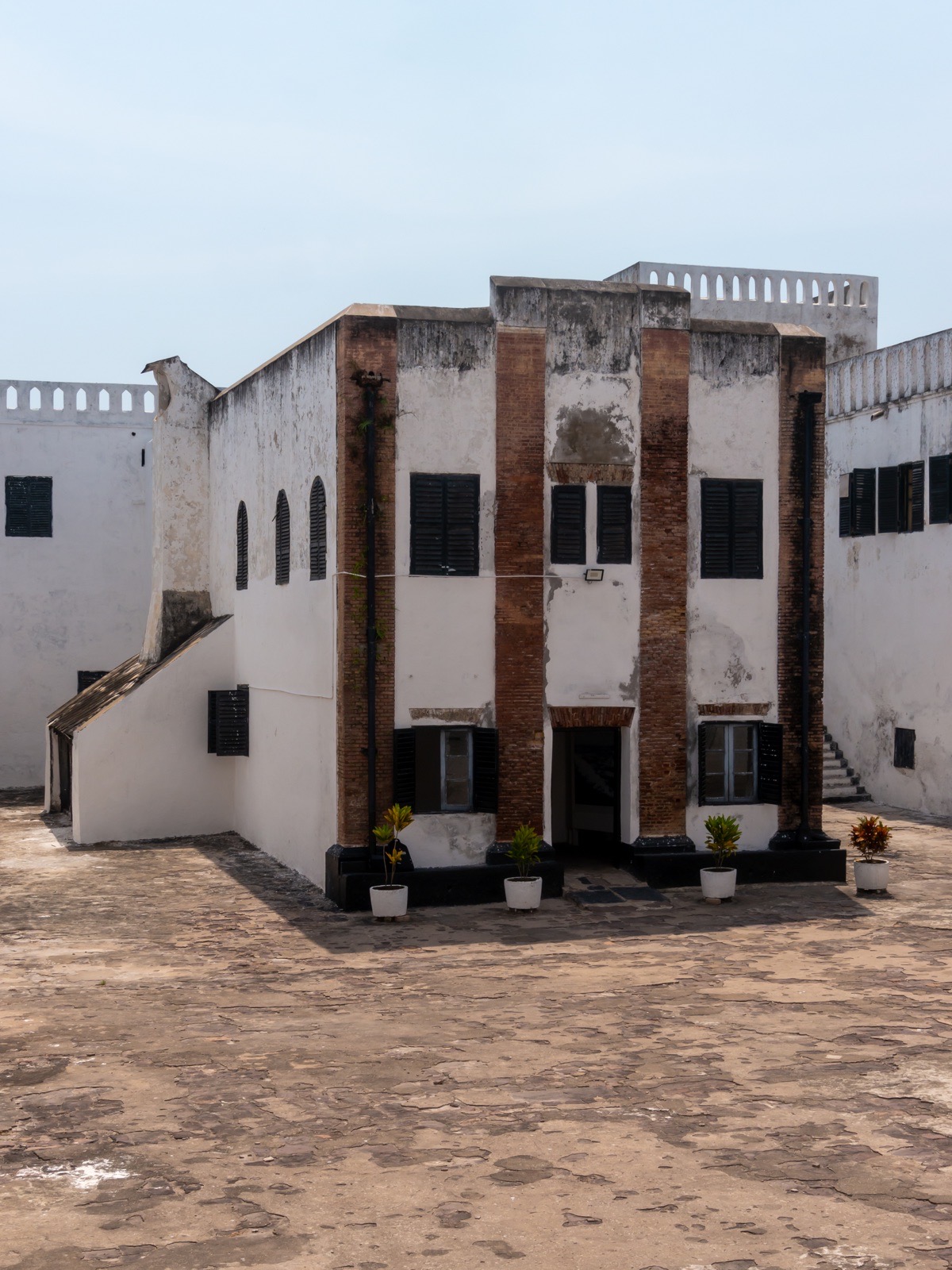
A place in the story
Elmina Castle
A fortified gold-trading centre whose changing uses became part of Atlantic slavery and its memory.
Narration available · 2 min
Listen to the story
Elmina Castle, narrated.
Read transcript
A fortified gold-trading centre whose changing uses became part of Atlantic slavery and its memory.
Before the fort. Elmina was part of an African coastal trading world before the Portuguese completed the castle in 1482. Gold from inland areas moved through networks of rulers, merchants and brokers. Fishing, farming and local markets made the coast a lived-in place, not an empty shore waiting for Europe. The name São Jorge da Mina, Saint George of the Mine, points to the commercial purpose Portugal wanted to secure. The story starts with an encounter between an existing African economy and a European power searching for a direct route to gold.
A changing purpose. Portuguese builders completed São Jorge da Mina in 1482 after negotiating within a local political landscape. The castle became a base for gold commerce, shipping and European influence. Dutch forces captured it in 1637, and Britain took control in 1872. Each transfer changed the balance of power around the site, but none erased the African communities and authorities around it. The stone walls therefore record more than one European flag. They also record diplomacy, competition and the hard material work of Atlantic commerce.
Memory in stone. The castle later became deeply connected to the captivity and forced movement of Africans through the Atlantic slave trade. Dungeons, courtyards and the doors leading towards the sea are now read alongside the lives that were torn from their communities. UNESCO places Elmina within Ghana's wider forts and castles heritage property. Today, the surviving building is a museum and a place of difficult memory. A responsible visit makes space for the commercial history, the violence, the people who resisted it and the descendants who continue to ask what remembrance should do.
The surviving site connects commerce, diplomacy, violence and remembrance in one place.
Before the fort
Elmina was part of an African coastal trading world before the Portuguese completed the castle in 1482. Gold from inland areas moved through networks of rulers, merchants and brokers. Fishing, farming and local markets made the coast a lived-in place, not an empty shore waiting for Europe. The name São Jorge da Mina, Saint George of the Mine, points to the commercial purpose Portugal wanted to secure. The story starts with an encounter between an existing African economy and a European power searching for a direct route to gold.
A changing purpose
Portuguese builders completed São Jorge da Mina in 1482 after negotiating within a local political landscape. The castle became a base for gold commerce, shipping and European influence. Dutch forces captured it in 1637, and Britain took control in 1872. Each transfer changed the balance of power around the site, but none erased the African communities and authorities around it. The stone walls therefore record more than one European flag. They also record diplomacy, competition and the hard material work of Atlantic commerce.
Memory in stone
The castle later became deeply connected to the captivity and forced movement of Africans through the Atlantic slave trade. Dungeons, courtyards and the doors leading towards the sea are now read alongside the lives that were torn from their communities. UNESCO places Elmina within Ghana's wider forts and castles heritage property. Today, the surviving building is a museum and a place of difficult memory. A responsible visit makes space for the commercial history, the violence, the people who resisted it and the descendants who continue to ask what remembrance should do.
Why this place matters
The surviving site connects commerce, diplomacy, violence and remembrance in one place.
Visiting with care: Treat the castle as a place of difficult memory rather than a casual photo stop.
Where this is today
Elmina Castle
Central Region · Exact surviving site
Open modern mapSources
Read the references behind this story.
Image credit: Matti Blume via Wikimedia Commons · Image source
 Continue to Cape Coast CastleCape Coast CastleA coastal castle that became a British headquarters and a major site of memory about the Atlantic slave trade.