A place in the story
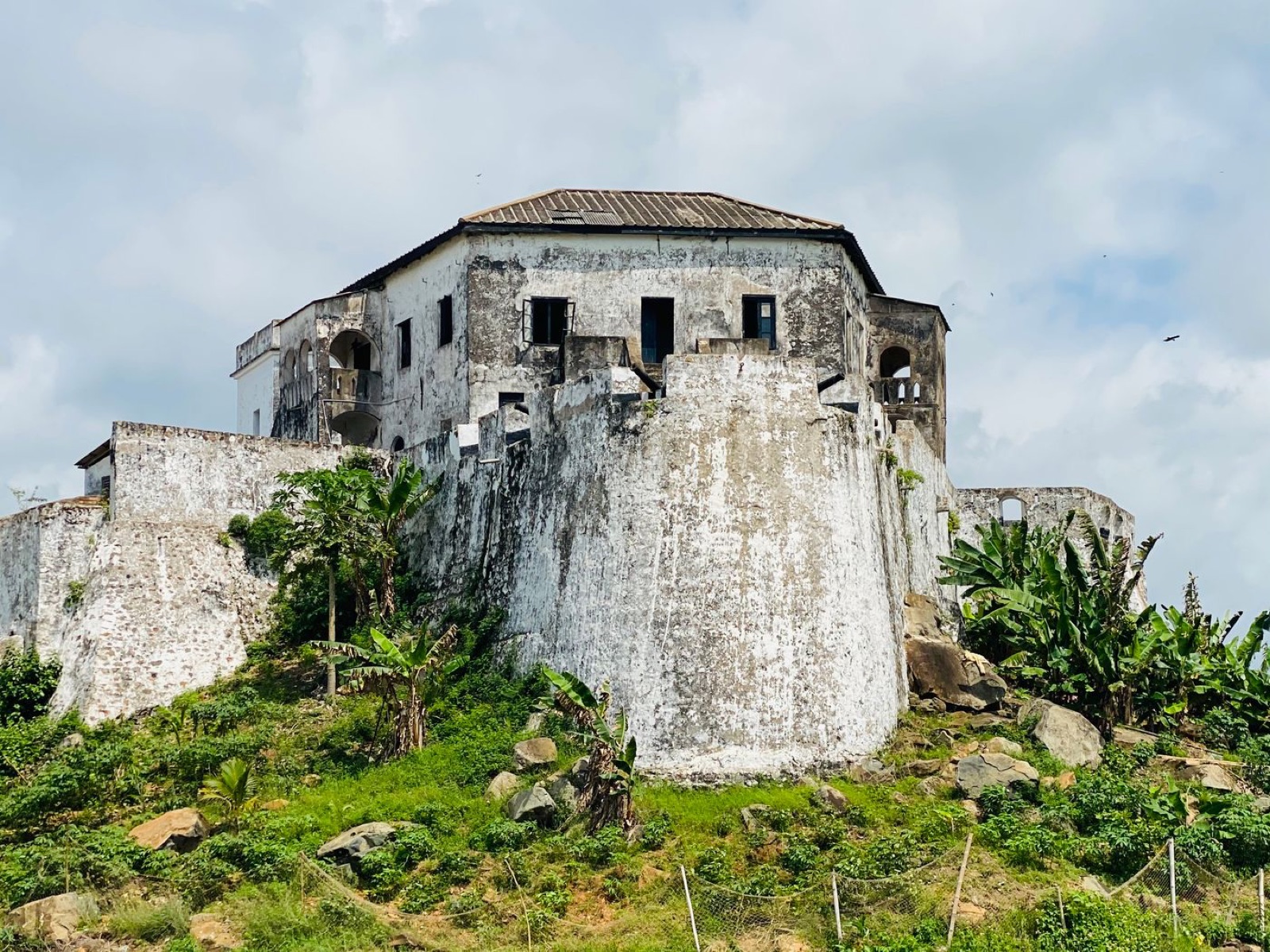
Fort Santo Antonio
A hilltop fort in Axim where gold commerce, Atlantic power and the western coast meet above the town.
Narration available · 2 min
Listen to the story
Fort Santo Antonio, narrated.
Read transcript
A hilltop fort in Axim where gold commerce, Atlantic power and the western coast meet above the town.
The coast turns west. Fort Santo Antonio sits at Axim, on a western stretch of Ghana's coast where the Atlantic opens toward the borderlands. The fort's position made sense to European powers looking for trade, defence and control. But the hill was already part of an African coastal world. Merchants, rulers, fishers and communities gave the area its value long before the surviving walls became a heritage site.
Trade never arrives alone. A fort built for commerce also carried weapons, rules and the ability to control movement. Gold trade connected inland production to the coast, while the Atlantic slave trade made coastal power even more violent. The building cannot tell every story by itself, but it can help visitors ask who controlled the route, who carried the cost and what happened beyond the walls. Western Ghana's quieter forts make those questions easier to overlook, which is why context matters.
Look out from the hill. The view over Axim is part of the experience, but it should not soften the history held by the site. Use a local guide, confirm opening arrangements and bring cash if local fees apply. Fort Santo Antonio connects the western coast to Ghana's wider forts network and to modern communities that continue to live with the legacy of Atlantic commerce. The right ending is not nostalgia. It is a clearer understanding of how place, trade and power were joined together. Read this place alongside the people who maintain it. A landmark becomes useful when it changes what you notice next: the road into a town, the work around a museum, the river beyond a view, or the memory a guide chooses to explain.
Fort Santo Antonio connects Axim's present-day coast to the commercial and military network that shaped Atlantic Ghana.
The coast turns west
Fort Santo Antonio sits at Axim, on a western stretch of Ghana's coast where the Atlantic opens toward the borderlands. The fort's position made sense to European powers looking for trade, defence and control. But the hill was already part of an African coastal world. Merchants, rulers, fishers and communities gave the area its value long before the surviving walls became a heritage site.
Trade never arrives alone
A fort built for commerce also carried weapons, rules and the ability to control movement. Gold trade connected inland production to the coast, while the Atlantic slave trade made coastal power even more violent. The building cannot tell every story by itself, but it can help visitors ask who controlled the route, who carried the cost and what happened beyond the walls. Western Ghana's quieter forts make those questions easier to overlook, which is why context matters.
Look out from the hill
The view over Axim is part of the experience, but it should not soften the history held by the site. Use a local guide, confirm opening arrangements and bring cash if local fees apply. Fort Santo Antonio connects the western coast to Ghana's wider forts network and to modern communities that continue to live with the legacy of Atlantic commerce. The right ending is not nostalgia. It is a clearer understanding of how place, trade and power were joined together. Read this place alongside the people who maintain it. A landmark becomes useful when it changes what you notice next: the road into a town, the work around a museum, the river beyond a view, or the memory a guide chooses to explain.
Why this place matters
Fort Santo Antonio connects Axim's present-day coast to the commercial and military network that shaped Atlantic Ghana.
Visiting with care: Confirm opening arrangements, use a guide and treat the fort's history as difficult heritage rather than a scenic backdrop.
Where this is today
Fort Santo Antonio
Western Region · Exact surviving site
Open modern mapSources
Read the references behind this story.
Image credit: Jesuraj Alakassery via Wikimedia Commons · Image source
 Continue to Fort AmsterdamFort AmsterdamA quieter Central Region fort that opens the wider story of European competition, coastal trade and African authority.