A place in the story
Larabanga Mystic Stone
A small sacred site near Larabanga Mosque where oral history, belief and the limits of written records meet.
Narration available · 2 min
Listen to the story
Larabanga Mystic Stone, narrated.
Read transcript
A small sacred site near Larabanga Mosque where oral history, belief and the limits of written records meet.
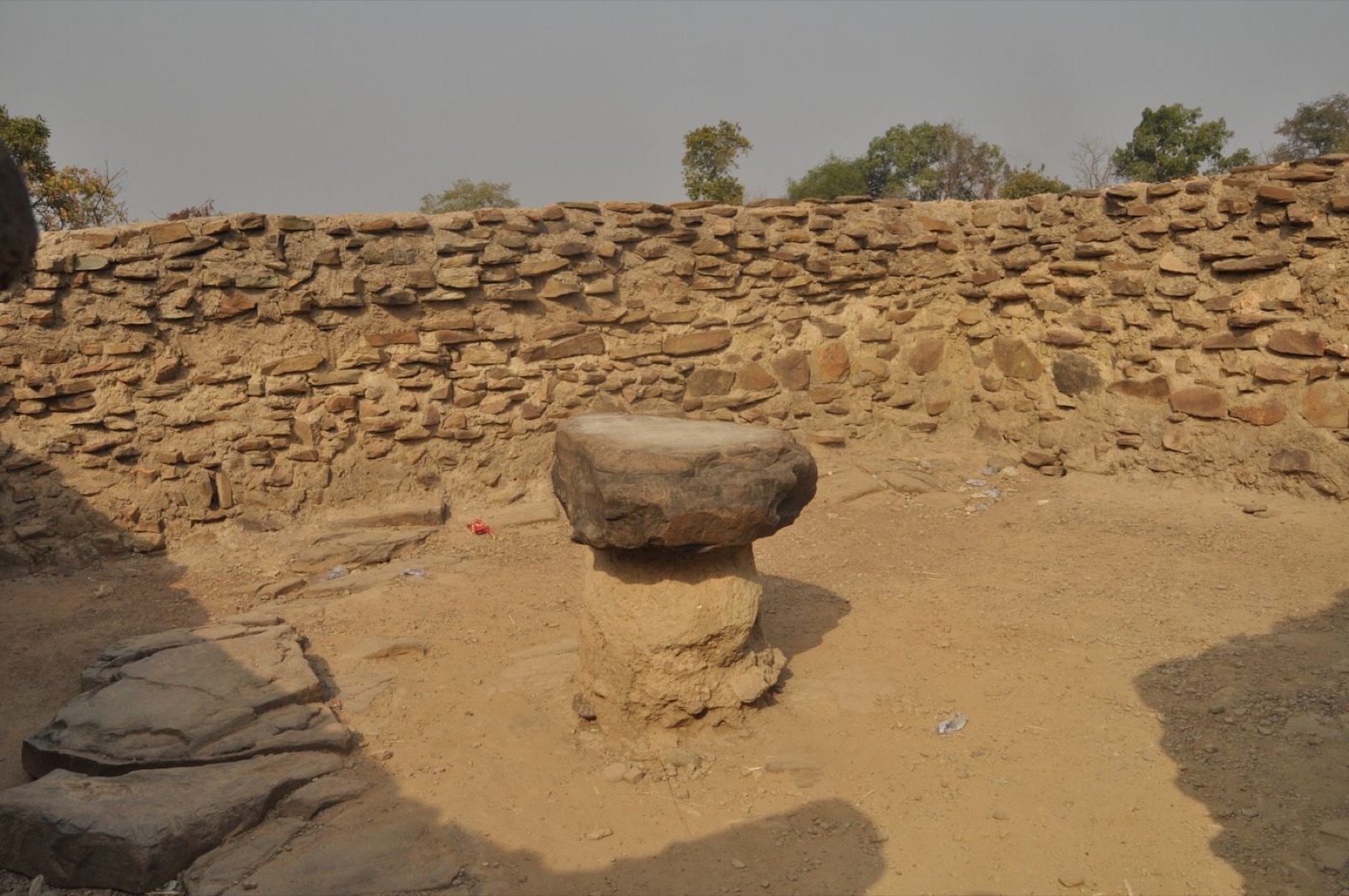
A stone with a story. The Larabanga Mystic Stone is small enough to miss if you are moving quickly toward the mosque or Mole National Park. Its importance comes from the story told around it, not from size. Local oral history gives the stone a place in the sacred landscape and in the memory of the community. Visitors should listen without assuming that one dramatic explanation can stand in for every belief or historical detail connected to the site.
What oral history carries. Written archives do not hold every kind of knowledge. Stories passed through communities can preserve relationships between people, land and sacred places, even when dates and details are debated. That does not make every claim automatically factual, nor does it make oral tradition less valuable. The stone offers a chance to practise a better habit: distinguish documented evidence, religious belief and community interpretation while allowing each to be understood on its own terms.
The guide is part of the place. Visit with local guidance and ask how the community wants the site approached. Do not touch, climb or photograph without permission. The stone works best as a short stop within a wider Larabanga story that includes the mosque, northern architecture and the route to Mole. Its lesson is quiet but important. Heritage can be carried in a story and a place at the same time, and respectful visitors do not need to flatten one into the other. Read this place alongside the people who maintain it. A landmark becomes useful when it changes what you notice next: the road into a town, the work around a museum, the river beyond a view, or the memory a guide chooses to explain.
The Mystic Stone shows how sacred geography and oral history add layers to the heritage around Larabanga.
A stone with a story
The Larabanga Mystic Stone is small enough to miss if you are moving quickly toward the mosque or Mole National Park. Its importance comes from the story told around it, not from size. Local oral history gives the stone a place in the sacred landscape and in the memory of the community. Visitors should listen without assuming that one dramatic explanation can stand in for every belief or historical detail connected to the site.
What oral history carries
Written archives do not hold every kind of knowledge. Stories passed through communities can preserve relationships between people, land and sacred places, even when dates and details are debated. That does not make every claim automatically factual, nor does it make oral tradition less valuable. The stone offers a chance to practise a better habit: distinguish documented evidence, religious belief and community interpretation while allowing each to be understood on its own terms.
The guide is part of the place
Visit with local guidance and ask how the community wants the site approached. Do not touch, climb or photograph without permission. The stone works best as a short stop within a wider Larabanga story that includes the mosque, northern architecture and the route to Mole. Its lesson is quiet but important. Heritage can be carried in a story and a place at the same time, and respectful visitors do not need to flatten one into the other. Read this place alongside the people who maintain it. A landmark becomes useful when it changes what you notice next: the road into a town, the work around a museum, the river beyond a view, or the memory a guide chooses to explain.
Why this place matters
The Mystic Stone shows how sacred geography and oral history add layers to the heritage around Larabanga.
Visiting with care: Use local guidance, ask before photographing and treat oral tradition, belief and documented history as distinct forms of knowledge.
Where this is today
Larabanga Mystic Stone
Savannah Region · Exact surviving site
Open modern mapSources
Read the references behind this story.
Image credit: Sathyan Velumani via Wikimedia Commons · Image source
 Continue to Tafi Abuife Kente VillageTafi Abuife Kente VillageA Volta Region weaving community where Ewe kente becomes a lesson in skill, identity, time and value.